As a child, my cousins and I would sometimes accompany a relative to visit our great aunt who lived alone with her tiny chihuahua.
I loved getting to visit her home because it was filled with all sorts of novel knickknacks and curios that we weren’t allowed to touch. My cousins and I would carefully slink around and exchange subtle wide-eyed glances when we saw something that caught our eye. Amidst all of the dolls, miniature dioramas and other fascinating novelties was a curio cabinet. We thought this was one of the most beautiful pieces of furniture we had ever seen because the shelves inside were made of glass and it was elaborately carved of polished dark wood, but the lock on the door also communicated an element of forbiddenness that added to the allure. I remember several of the items in the cabinet were vibrantly colored and ornately decorated egg shapes. Each of these eggs sat on its own little stand often made of silver or gold and beautiful in their own right. I longed to know what was inside these eggs, and one day my aunt opened one of the eggs to reveal a tiny female figure. I later learned that these were called Fabergé eggs.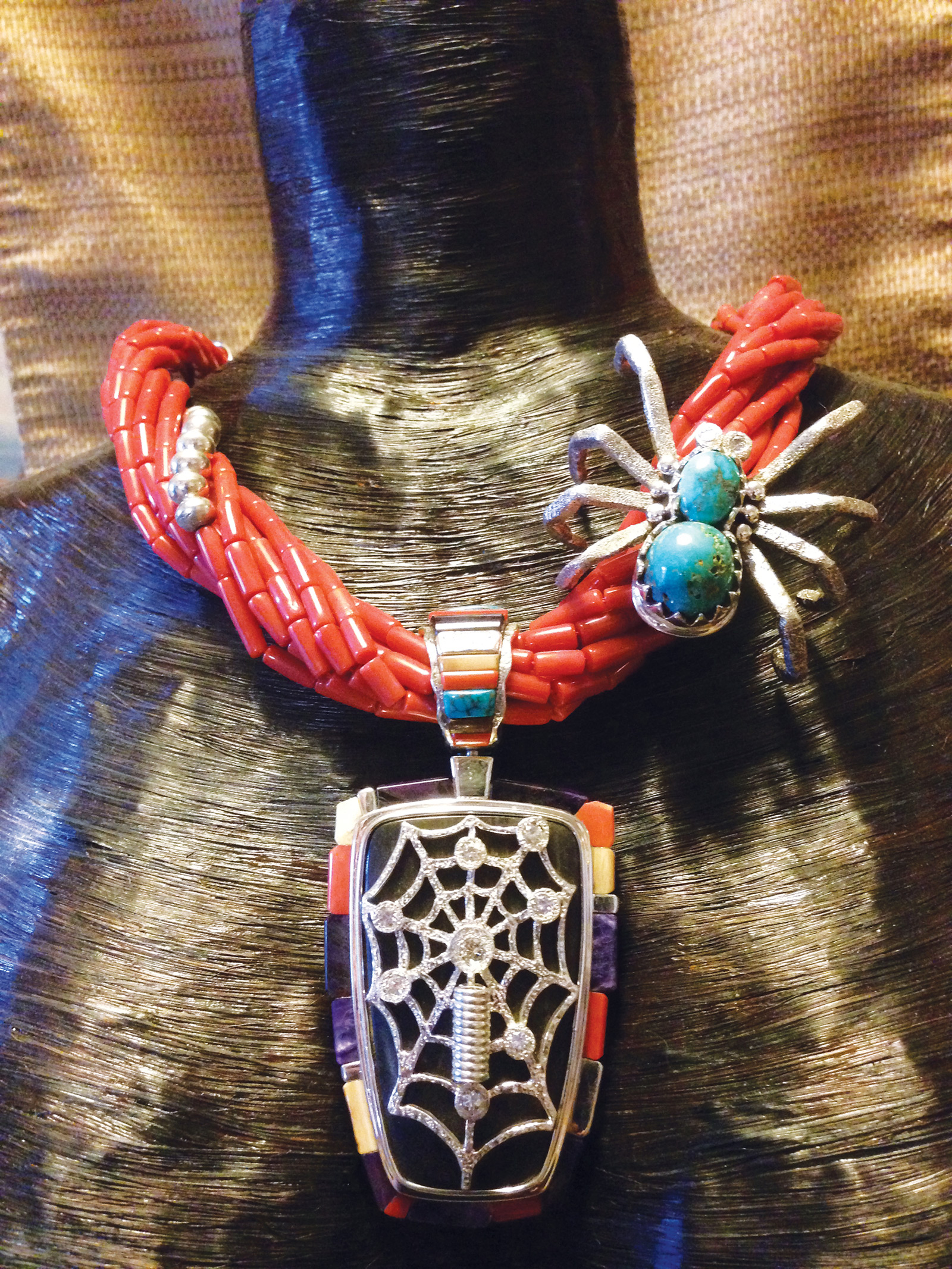 Necklace Series No. 9, 2013, silver, corral, sugilite, charoite, diamonds, North American turquoise, ebony wood
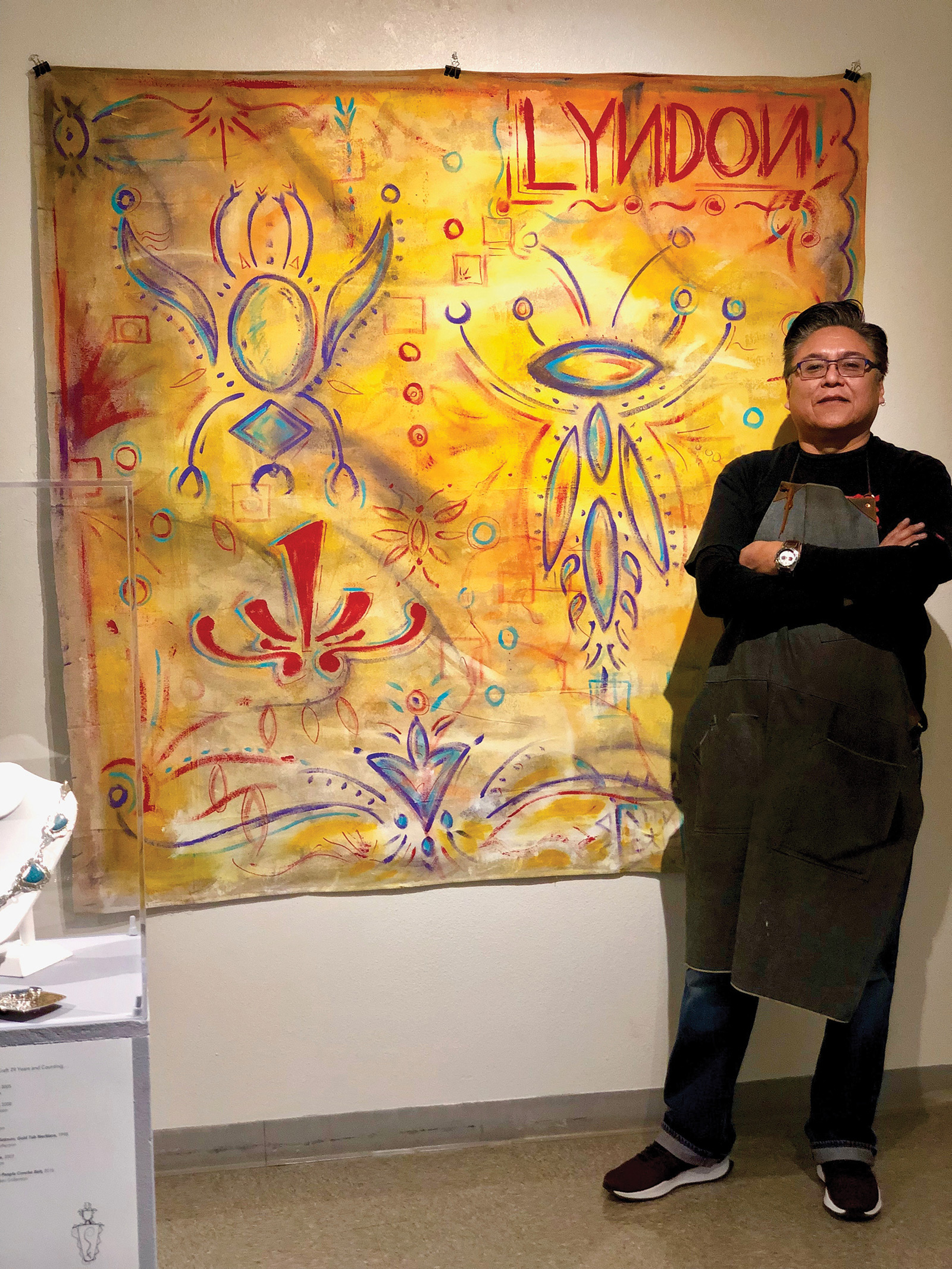 Jewelry artist Lyndon B. Tsosie.
The curio cabinet, and its awe-inducing contents, came to mind after viewing the work of Navajo artist Lyndon B. Tsosie. The jeweler makes the typical array of beautiful adornment items one would expect a silversmith to produce, but he also enjoys challenging his skills as an artist with creations that are not as common, including a Fabergé egg or two.
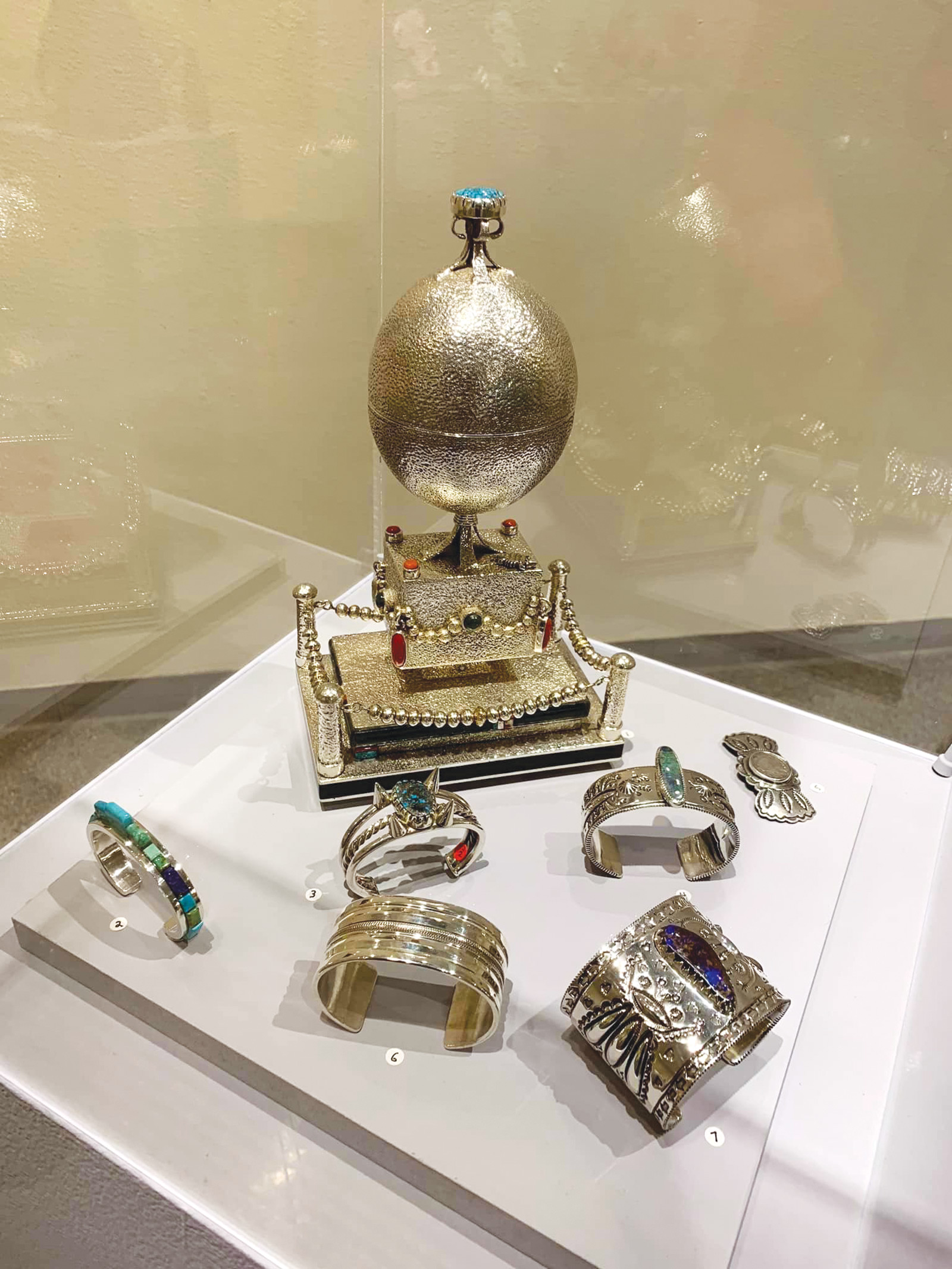 Various pieces by Lyndon B. Tsosie, including the large silver egg, If Carl Fabergé Were Navajo from 2011.
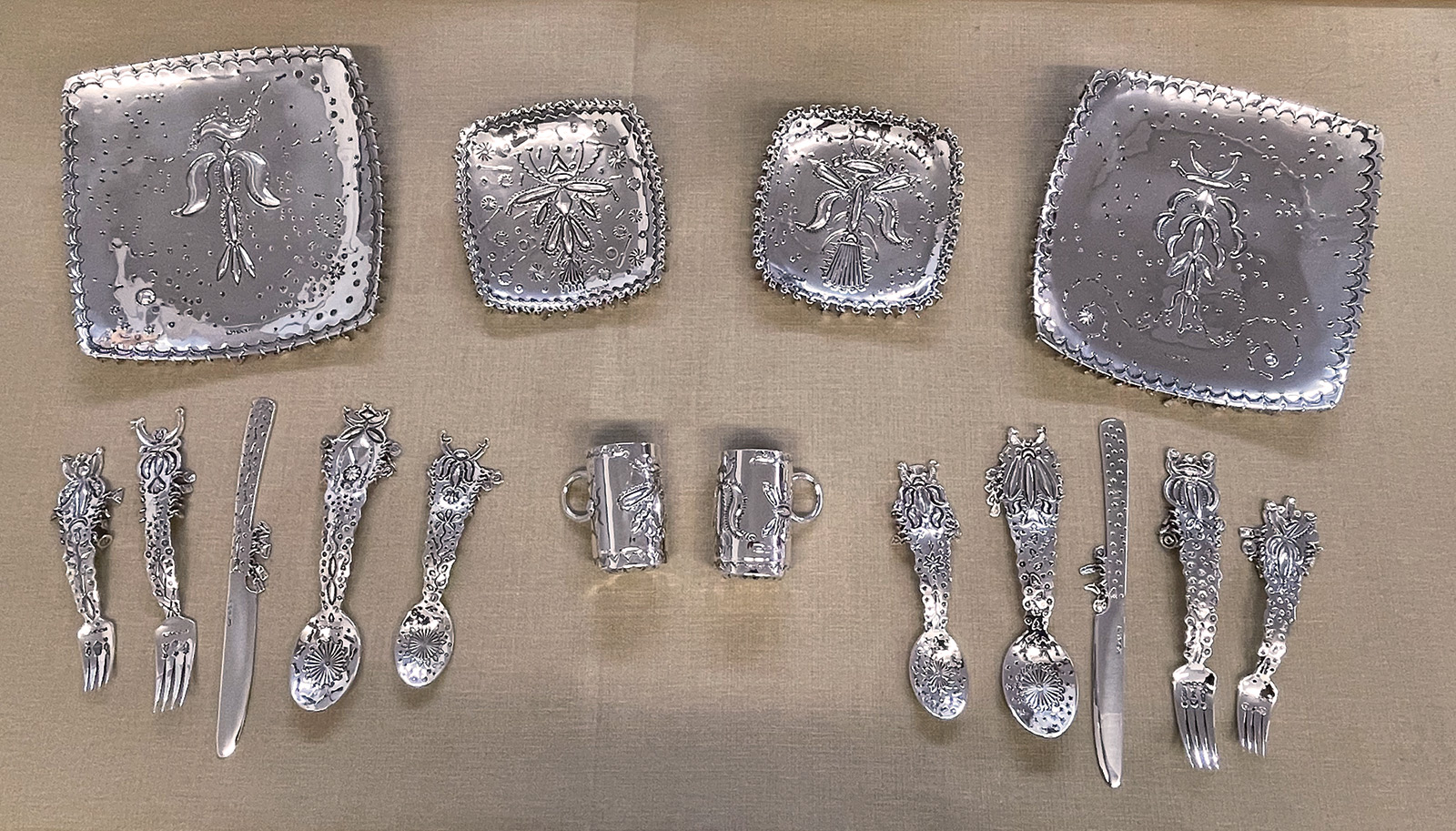 So’ Bits’áádéé Iina’ Hajiinee’ (Origin of Life Through Light), 2022, silver, various sizes
His egg pieces brought me back to that moment of absolute awe from my childhood. Tsosie shared a familiar story from his youth. His mother would drive him and his sister from Albuquerque to visit their aunt at Laguna Pueblo. He enjoyed visiting her house because she had a bookshelf full of National Geographic magazines. Tsosie would beg his mom to take them to visit his auntie because he loved looking at those magazines. “That’s where the world came to me,” he explains. It was during one of these much-anticipated visits that he sat on the floor, flipping through the pages of a National Geographic, when he first saw an image of a Fabergé egg. As an 8-year-old boy, these eggs were absolutely fascinating. Years later, he was working in the studio on bracelets made from tufa casting. As he was shaping the bracelets, he looked at the eight or nine that he had made thus far, and realized that together they formed the shape of an egg. From there the idea formed to create a Fabergé egg out of silver. This piece took three months to complete, but it was ready in time for the Heard Museum market that year. As someone who would love to see a piece like that, I asked Tsosie if he had any plans to make any other Fabergé eggs. He responded with uncertainty and shared that when he creates, there needs to be a certain level of inspiration to drive the work—he elaborates, “It’s really not about the money when I create these things, it’s about how I feel.”
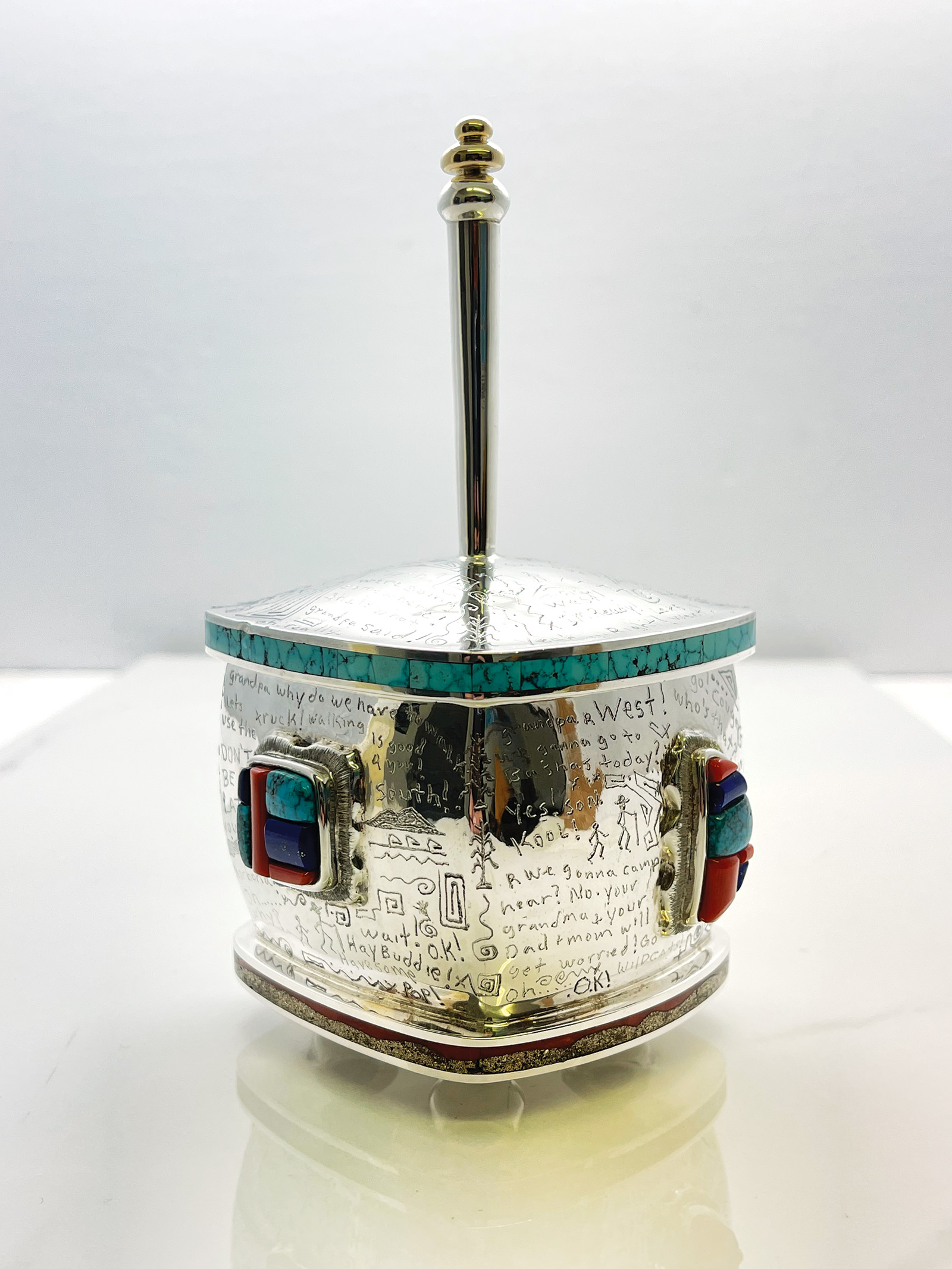 Grandpa and Eyan’s Day, 2003, silver, Lone Mountain turquoise, Kingman turquoise, corral, lapis lazuli, ebony wood and a diamond, 5 x 3 x 3”
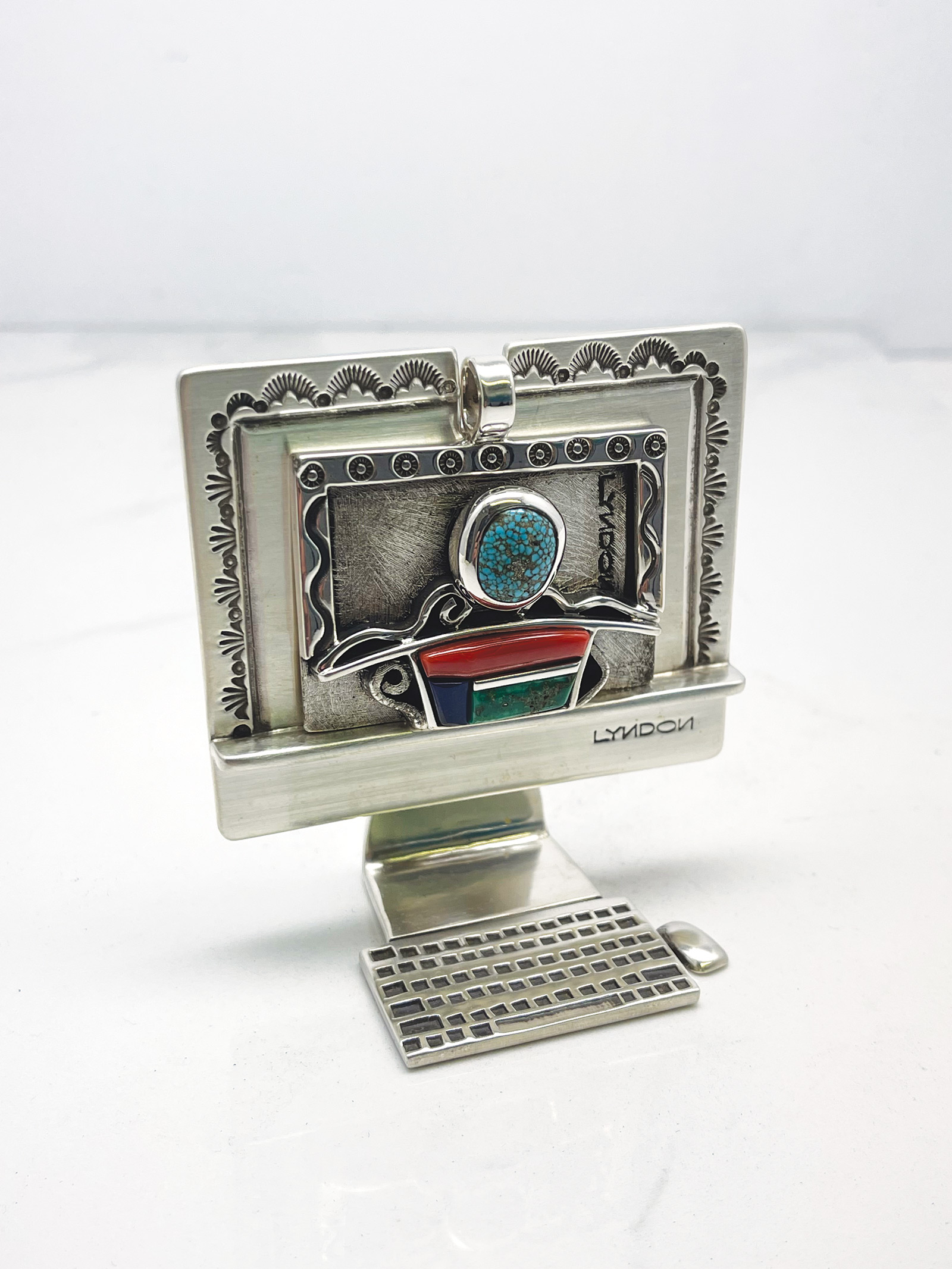 Silver Computer Pendant, 2021, silver, corral and North American turquoise
Tsosie is greatly motivated from the challenge of creating a particular piece. Whether it’s elaborate art pieces that are not meant to be worn—from precious silver vessels and elegant Fabergé eggs to silver place settings and tea sets to extremely intricate miniature silver inlaid boxes—he is driven by pushing his work as far as it can go. In the late 1990s, Tsosie was working in his shop—then just a bedroom in a house he shared with his father in Chinle, Arizona—and he found himself staring at a piece of stone when an idea came to him to create a box. “I didn’t really think about who had made what before I had,” he recounts. “I wanted to see if I could make a nice box out of all stone and metal.” Since then he has made several boxes, each one more elaborate than the one before it. Several of them are not only beautifully designed on the outside, but have intricately inlaid stones and other design elements on the inside. Like the Fabergé egg, Tsosie’s interest in these pieces stems from internal inspiration rather than external demand. “The inspiration was just to see if I could do it. Each box I have made has been totally different from one another, and I haven’t made a box in several years, because I just don’t feel it’s right at this time.”
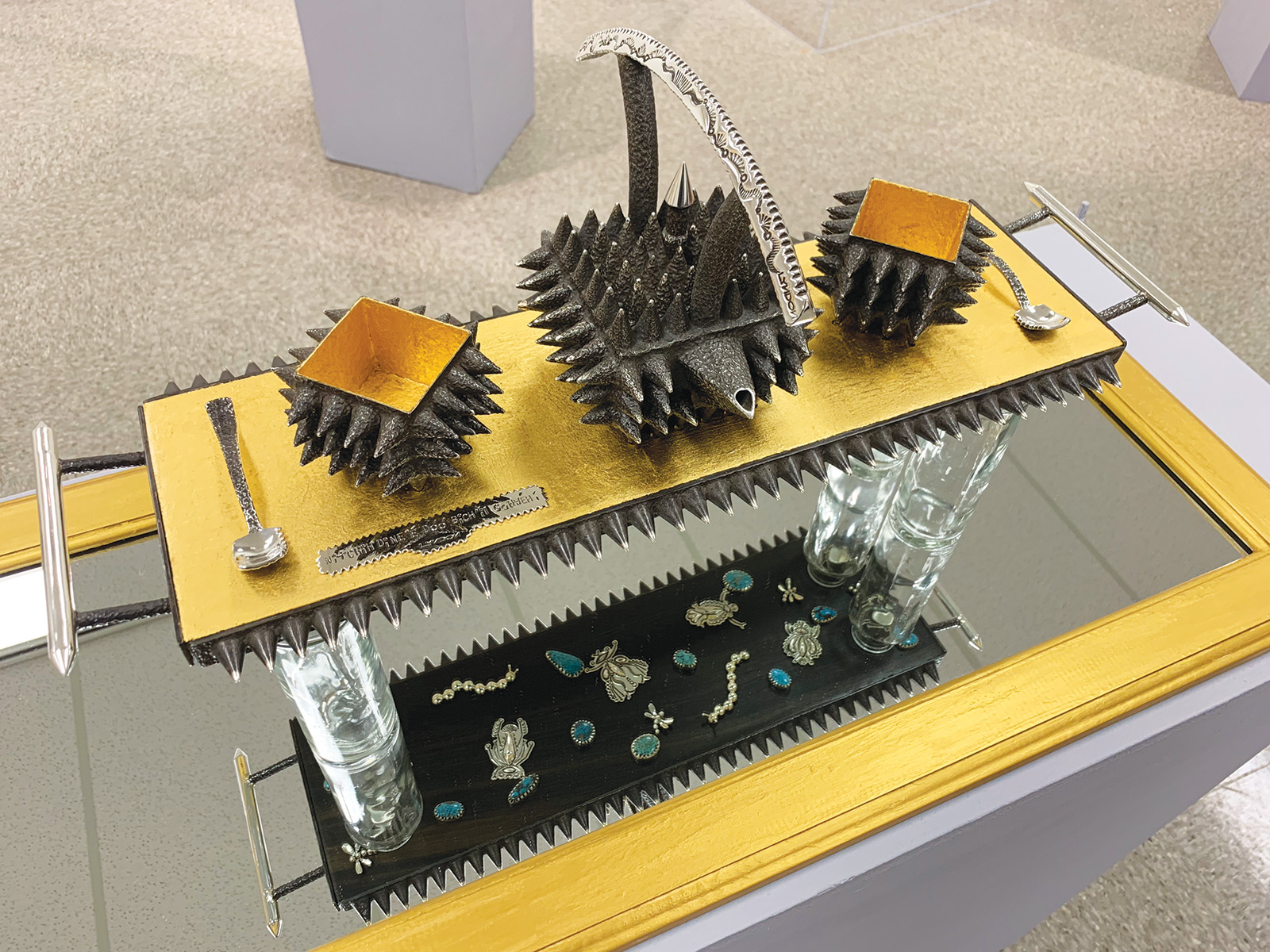 Niłchih Dine’é Dóó Bich’il Gohwéhí (The Air People and Their Tea), 2017, sterling silver and gold leaf
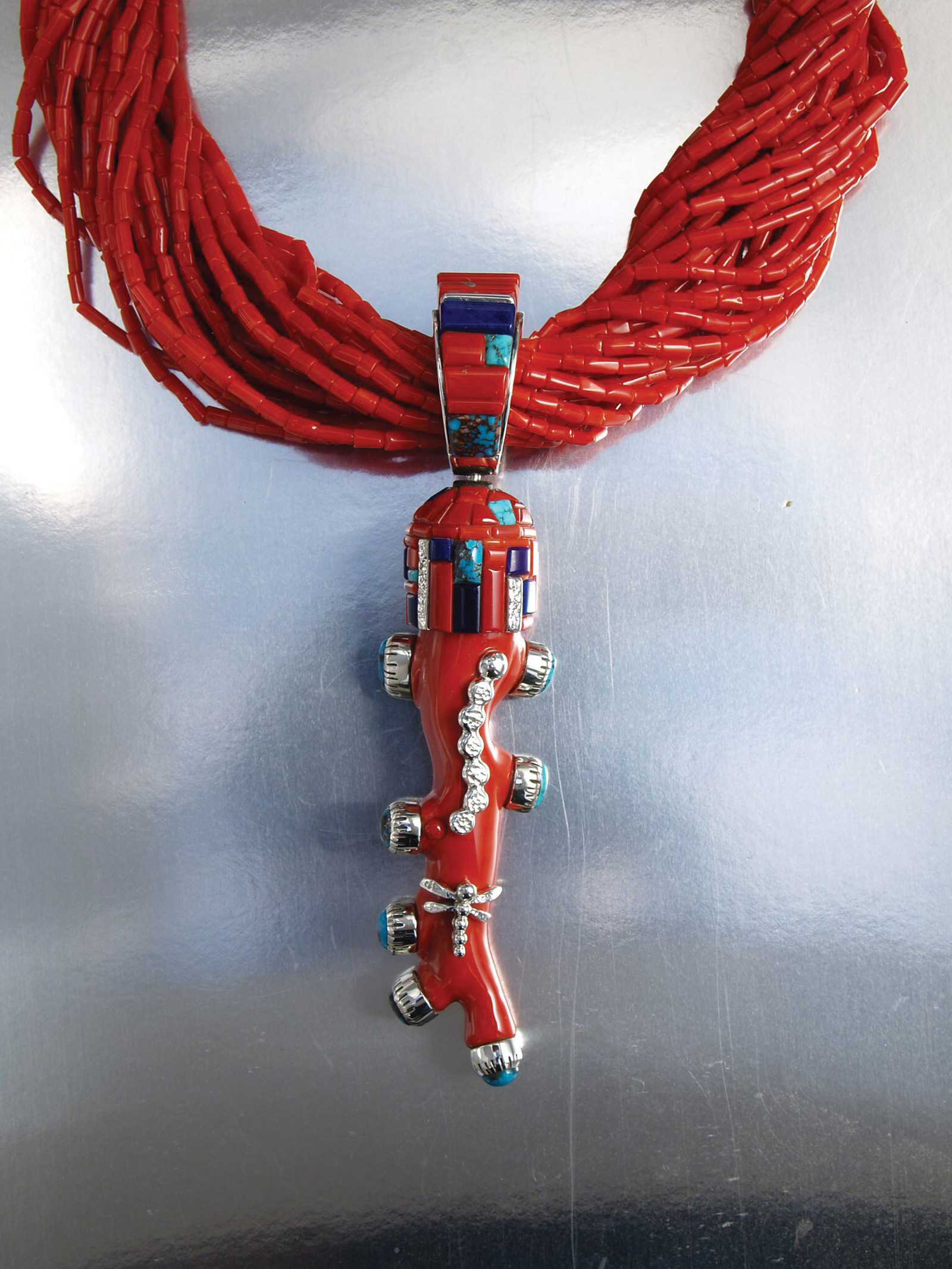 Necklace Series No. 8, 2009, corral, Bisbee turquoise, sugilite and lapis
This interest in challenging his skills as an artist is what inspires much of his work, including his award-winning dinner set, made with such precision and care and glimmering with complex yet delicate insect forms. This piece took years to make, but he explains that it was exciting for him to create something he had never made before. Much of Tsosie’s career has been driven by self-motivation and inspiration to create and challenge himself. He first became interested in silversmithing as a career after a fateful visit to a bookstore several decades ago. He stumbled across Dexter Cirillo’s Southwest Indian Jewelry as he was browsing, and the awe invoked by the images in the book led Tsosie on this path. This book cost almost all of the money that he had at the time, but he said it’s the best investment he’s ever made. “That book was my teacher,” he says.
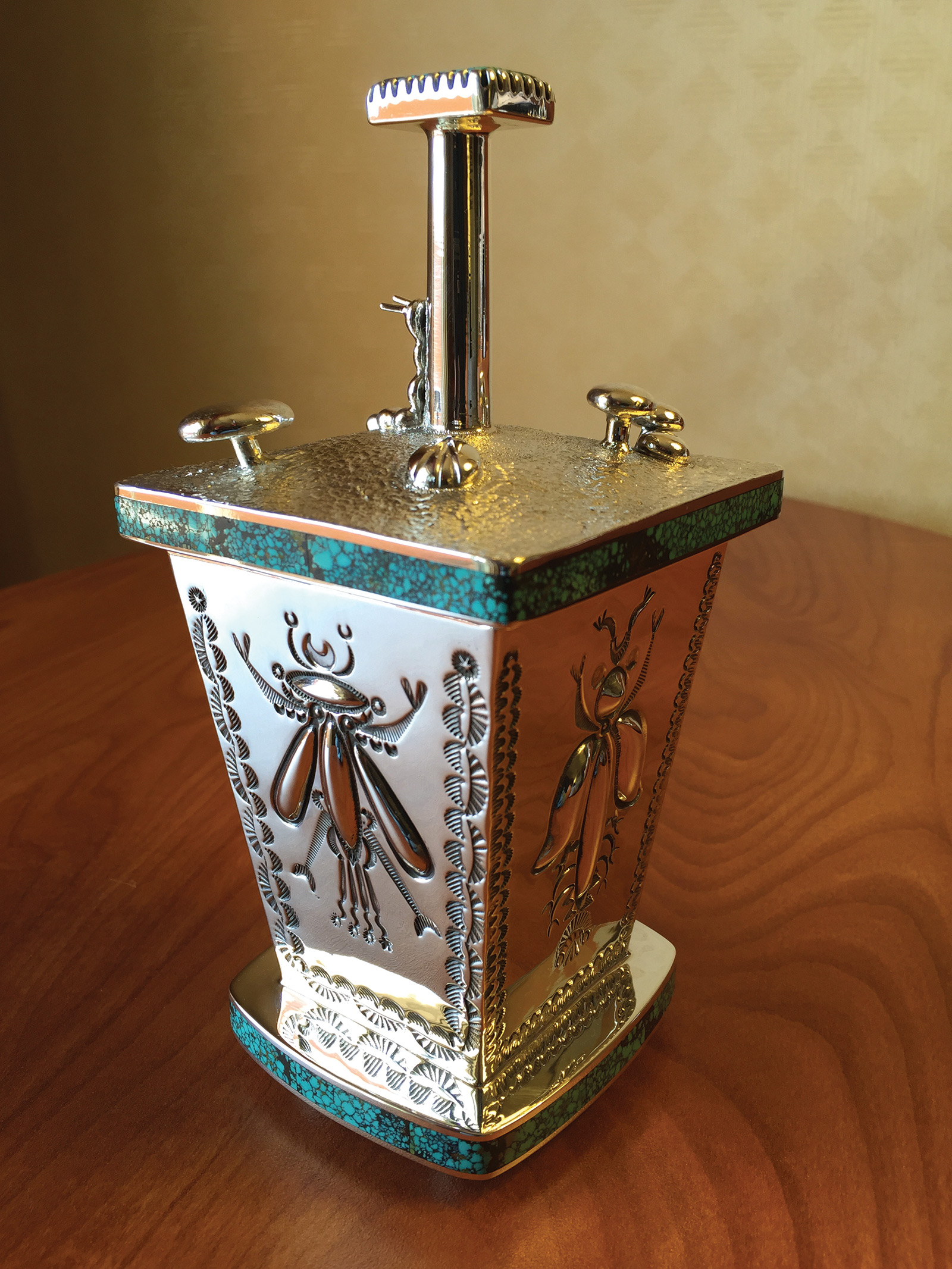 The Beginning of Life, 2015, sterling silver, corral, Nevada Blue turquoise, 5½ x 3 x 3”
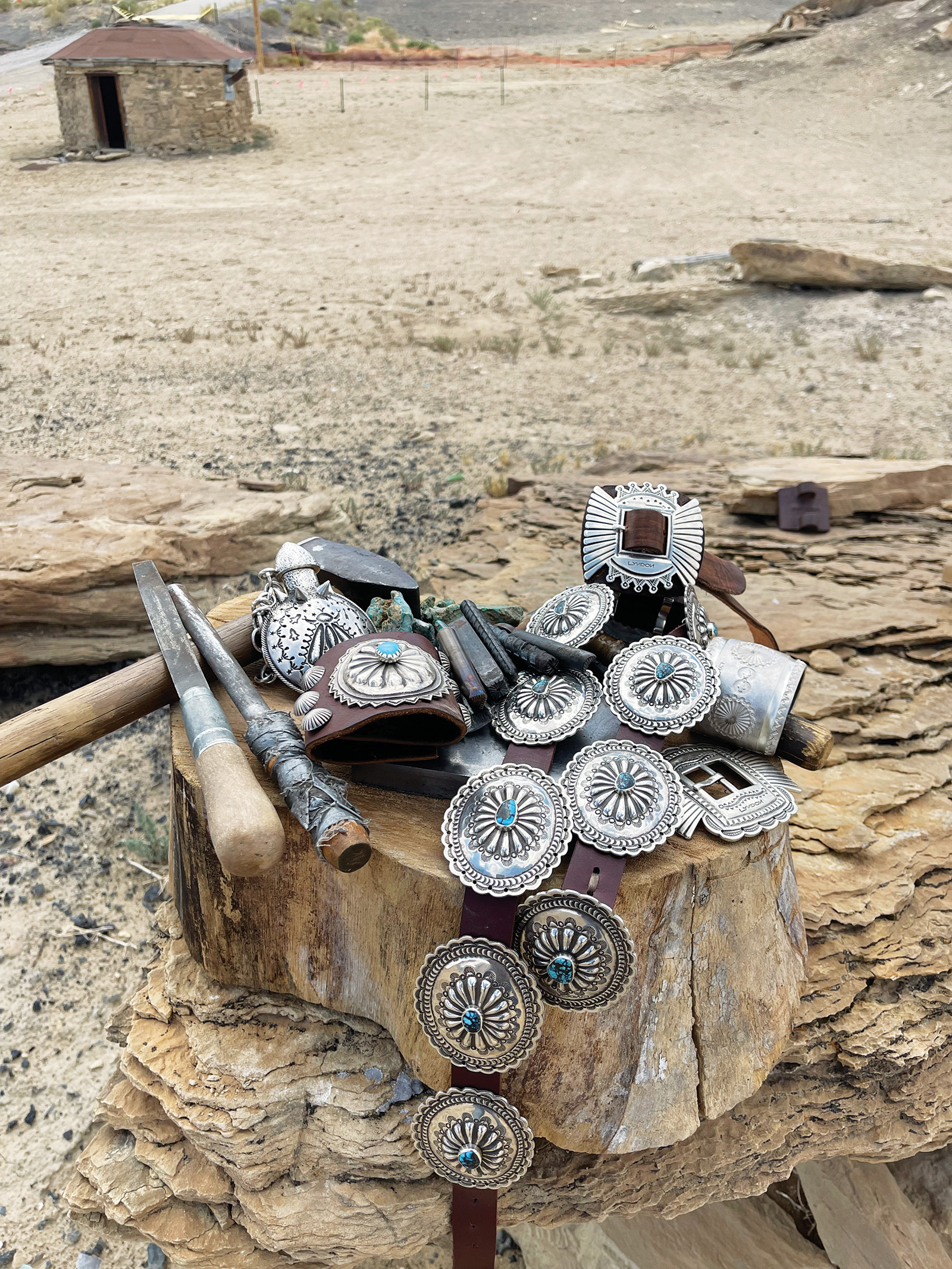 Silver work by Lyndon B. Tsosie in Naschitti, New Mexico. The hogan in the top left is where the artist’s mother was born.
Since that day, Tsosie has worked hard to continue to challenge himself as an artist and develop the skills that he now shares with other makers in retreats he hosts with House of Stamps, Tsosie’s company that offers metal stamps and jewelry tools to makers and artists all around the world. Additionally, years after that life-changing day in the bookstore, Tsosie has been featured in a more recent iteration of Dexter Cirillo’s Southwest Indian Jewelry.
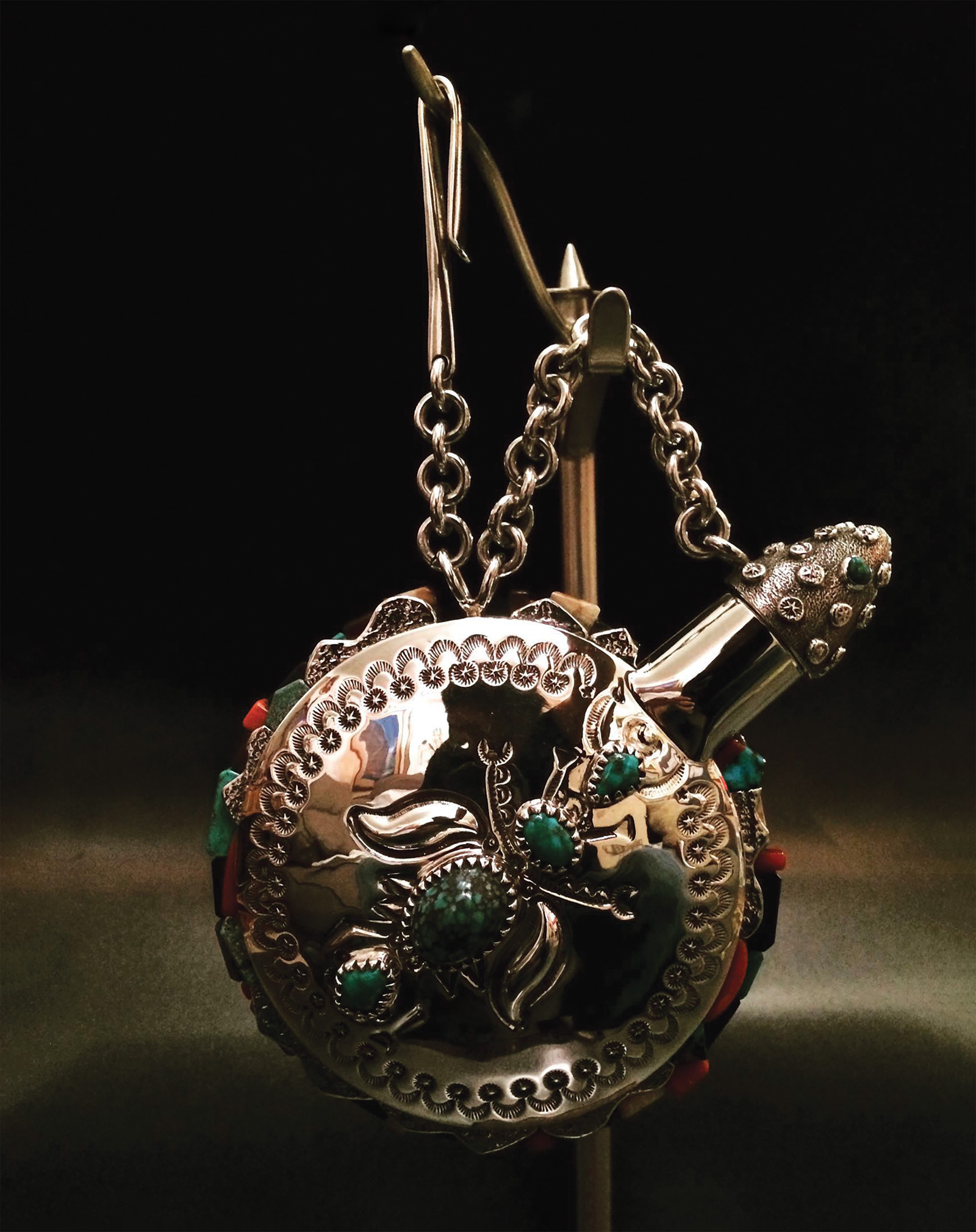 Navajo Canteen, 2012, silver, corral, Lone Mountain and Indian Mountain turquoise, ebony and mastodon, 6 x 4”
Tsosie says he never seeks to mimic or copy, and that he draws from his surroundings and the familiar landscape of the Navajo Nation. He elaborates that “everything I see, in a sense, has inspired me to do what I do,” he says. “[I want to] keep making beautiful art.”
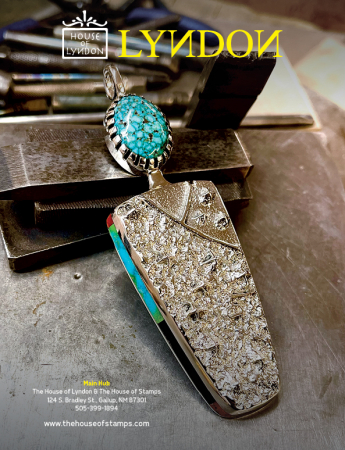
The best way to stay up to date on Tsosie’s work and upcoming workshops and events is to visit the House of Stamps website at www.thehouseofstamps.com, and follow both the House of Stamps (@thehouseofstamps) and Lyndon Tsosie on social media (@the_house_of_lyndon). Tsosie just finished a pop-up at the Sundance Gallery in Illinois, but you can expect to see him and his work at the Lightning Boy Foundation’s market on November 25 and 26, and the upcoming Heard Museum Guild Indian Fair & Market in March in Phoenix.
Powered by Froala Editor